A bathroom vanity in Australia typically costs between $300 and $5,000 or more, depending on size, material and whether you choose wall-hung or floor-standing. The total bathroom vanity cost is driven by cabinet construction, benchtop finish, basin type and whether you supply and install yourself or engage a tradesperson. This guide breaks down supply-only pricing, installation charges and the key decisions that move the final bill.
Vanity Cost by Size
Vanity prices climb with width because larger cabinets use more material, often include double basins and require heavier-duty fittings. Standard depths sit around 450–550 mm, but length is the main price driver.
- 600 mm vanity (single basin): $300–$1,200 for laminate or timber veneer; $800–$2,500 with a stone or porcelain top.
- 750–900 mm vanity: $400–$1,800 laminate/veneer; $1,000–$3,200 stone top.
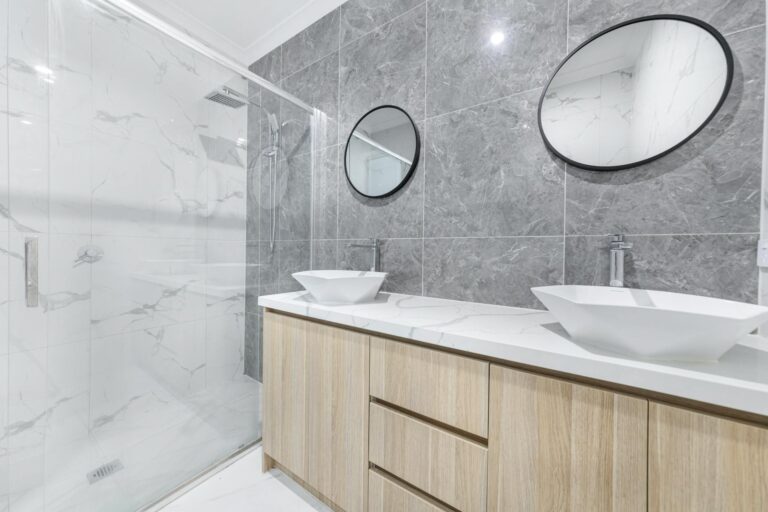
- 1,200 mm vanity (often double basin): $600–$2,200 laminate/veneer; $1,500–$4,500 stone top.
- 1,500+ mm vanity: $900–$3,000 laminate/veneer; $2,500–$6,000+ stone or custom solid timber.
Custom or non-standard heights add 15–30 per cent. Wall-hung frames that conceal cisterns or laundry plumbing can push cabinetry costs up another $200–$600.
Vanity Cost by Material
Cabinet carcasses are usually moisture-resistant particleboard or MDF, so the door finish and benchtop define both look and price.
Laminate and melamine
Laminate doors over particleboard deliver the lowest entry point. Expect $300–$1,000 for a 600 mm unit supply-only. High-pressure laminate (HPL) in matte or two-pack finishes can reach $1,200–$1,800 for the same size. Laminate handles moisture well if edges are sealed, making it a sensible choice for humid bathrooms.
Timber veneer
Real-wood veneer over engineered board offers warmth without solid-timber weight or movement. A 750 mm veneer vanity typically runs $700–$2,000 depending on species (oak, American walnut, blackbutt). Darker stains and book-matched grain patterns sit at the upper end.
Polyurethane (two-pack)
Spray-finished polyurethane doors give a smooth, high-gloss or satin sheen. A 900 mm two-pack vanity starts around $1,000 and can exceed $2,500 if the finish includes colour-matching or metallic tones. Two-pack resists moisture and cleans easily but shows fingerprints on gloss surfaces.
Stone and porcelain benchtops
Natural stone (marble, granite) tops add roughly $400–$1,500 to the base cabinet price for a single under-mount basin cutout. Thicker slabs (40 mm versus 20 mm), waterfall edges or honed finishes push the figure higher. Engineered stone can no longer be supplied or installed in new work, as it has been banned across Australia since 1 July 2024 because of the silica dust risk to workers (Safe Work Australia). Porcelain and sintered stone are not covered by the ban, are uniform in colour and need less sealing than natural marble or granite, so ask suppliers for current pricing.
Solid timber
Solid hardwood vanities—messmate, spotted gum, Tasmanian oak—range from $1,500 for a simple 600 mm unit to $5,000+ for bespoke joinery. Timber needs regular oiling in wet areas and will move slightly with humidity, so joiners leave expansion gaps and use marine-grade adhesives.
Wall-Hung vs Floor-Standing Vanities
The mounting method affects both the purchase price and installation labour.
Floor-standing vanities
Legs or a kick-board carry the weight to the floor. Supply-only pricing is typically $50–$150 less than an equivalent wall-hung unit because no steel mounting bracket is needed. Installation is faster: the plumber sets the cabinet, levels it with adjustable feet, then connects waste and taps. Expect one to two hours of plumber time for a straightforward swap.
Wall-hung (floating) vanities
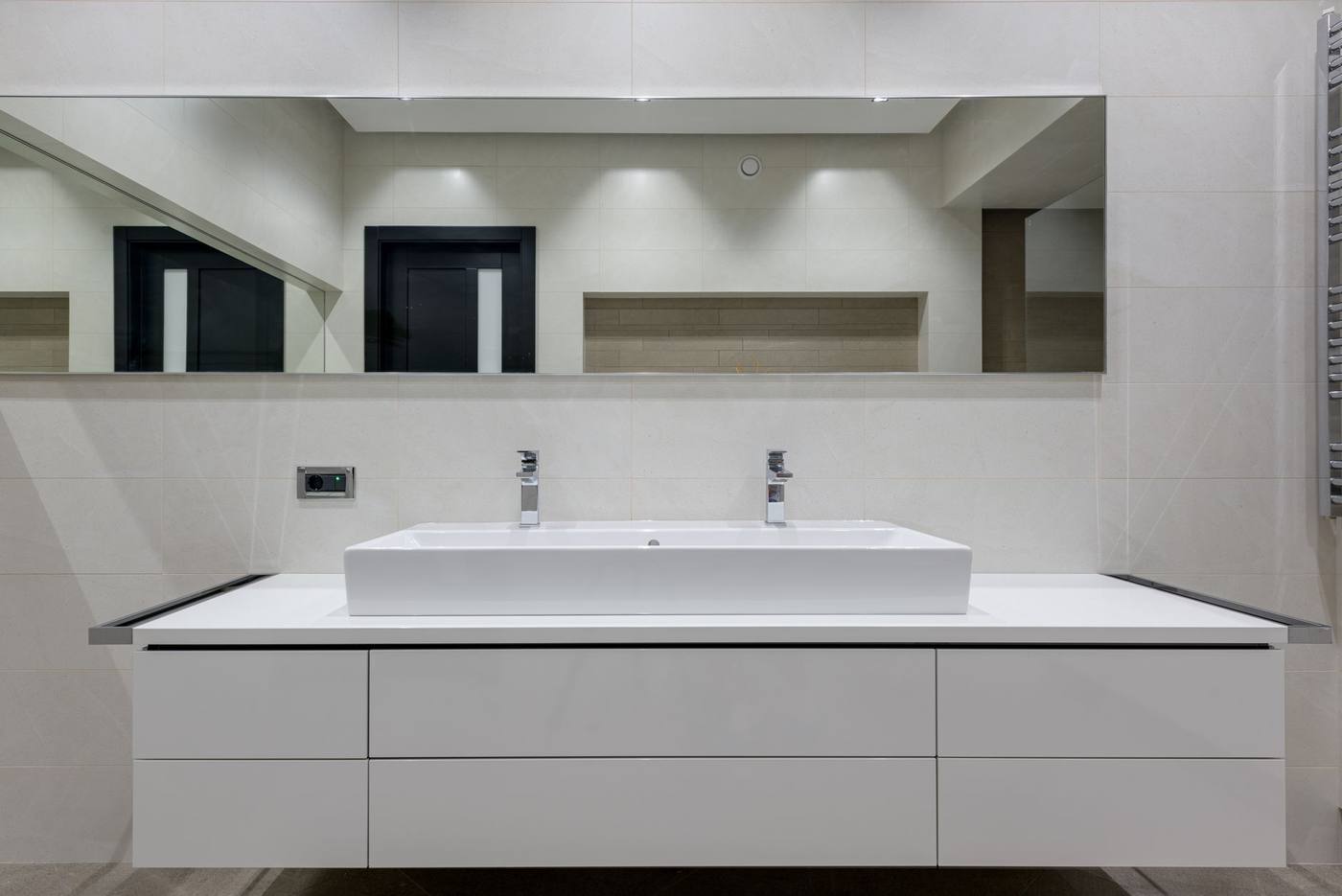
A steel frame bolts to wall studs and the cabinet hangs from it, leaving the floor clear for cleaning. The bracket adds $80–$200 to the cabinet price. Installation takes longer—two to three hours—because the frame must be secured to timber or steel studs (not just plasterboard) and levelled precisely before the cabinet slides on. If studs fall in the wrong spot, the installer will fix a treated-pine bearer between them. Wall-hung units suit modern, minimalist bathrooms and make small spaces feel larger, but they require solid structure behind the wall.
Supply-Only vs Supply-and-Install Pricing
Many retailers quote vanity packages (cabinet, basin, tap, waste) as supply-only. Adding installation brings in plumber and sometimes carpenter labour.
Supply-only packages
Big-box stores and online specialists sell flat-pack or pre-assembled vanities from around $300. A typical 750 mm package—laminate cabinet, ceramic basin, chrome mixer—runs $500–$900. Premium 900 mm stone-top packages with soft-close drawers and an under-mount basin sit between $1,800 and $3,500. You arrange your own trades and take responsibility for fit, so measure the recess carefully and confirm tap-hole spacing matches your chosen mixer.
Supply-and-install quotes
Bathroom retailers and renovation companies bundle product and labour. For a standard swap (similar footprint, no new plumbing runs), expect to add $400–$800 in labour to the cabinet price. That covers removal of the old unit, minor patching of tiles or paint, installation of the new vanity, connection of water supply and waste, and silicone sealing. If the new vanity is wider or you are relocating pipework, plumbing costs can climb to $1,200–$2,000 because the tradesperson will need to extend hot and cold lines, move the waste stack and possibly retile or replaster.
Choosing supply-and-install reduces coordination stress and often includes a workmanship warranty. Supply-only saves $400–$800 but requires you to schedule and supervise trades, so weigh that time cost against the dollar saving.
Installation Cost Breakdown
Even a straightforward vanity swap involves several trades and tasks. Understanding each helps you read quotes and spot missed items.
- Plumber labour: about $100–$150 per hour in metro areas; one to three hours depending on mounting method and whether waste or supply lines need adjustment.
- Removal and disposal: Taking out the old vanity and hauling it away adds $100–$200 if not included in the quote.
- Wall preparation: Patching tile grout, repainting or fixing new timber noggins for a wall-hung frame can add $150–$400 in carpenter or handyman time.
- Tap and waste supply: If the package excludes tapware, budget $80–$400 for a mixer and pop-up waste, plus one hour of plumber time to fit.
- Electrical (if adding shaver outlet or LED mirror): $150–$350 for a licensed electrician to run cable and install a socket.
Always confirm what the quote covers. Some installers include silicone and minor touch-ups; others charge those as variations.
Other Factors That Affect Bathroom Vanity Cost
Beyond size and material, a handful of details move the price or complexity.
Basin type
Integrated moulded basins (benchtop and bowl formed as one piece of poly-marble or composite) cost less to install because there is no separate cutout or sealing. Under-mount basins—where the bowl sits below a stone top—require precise cutting and polishing of the stone edge, adding $150–$300 in fabrication. Semi-recessed and vessel basins fall in between.
Storage configuration
Two-drawer units with soft-close runners and internal dividers cost $100–$300 more than a basic two-door cabinet of the same width. Drawers use full-extension slides rated for the weight of wet towels and toiletries, so hardware quality matters. Taller shaving cabinets or side towers add $200–$800 per module.
Custom sizing and joinery
Off-the-shelf vanities come in 50 mm or 150 mm increments. If your recess is an odd width or you want the benchtop to wrap around a corner, expect custom-joinery pricing: $2,000–$6,000 for a one-off unit in laminate or veneer, $4,000–$10,000+ for solid timber or stone with mitred edges. Lead times stretch to four to eight weeks.
Accessibility features
Vanities built to AS 1428.1 (Design for Access and Mobility) require knee clearance below the basin, lever handles and specific basin-rim heights. Custom accessible joinery typically costs 20–40 per cent more than standard because of the cantilevered structure and reinforced wall fixings.
DIY Installation Considerations
Handy owner-builders can fit a floor-standing vanity if existing plumbing lines up with the new unit. You will need an adjustable wrench, silicone gun, level and flexible tap connectors. The main risk is cross-threading tap tails or over-tightening compression fittings, which can crack ceramic or start a slow leak inside the cabinet.
Wall-hung vanities demand more: a stud finder, masonry drill, spirit level and confidence that your wall framing will carry 40–60 kg of filled cabinetry. Plasterboard alone will not hold the load, so you must locate studs or install a continuous timber bearer. If you tackle it yourself, turn off the water at the isolating valves (or mains if there are no valves), fit the frame first, hang the cabinet, then call a licensed plumber to make final water and waste connections. Many insurance policies require licensed work for concealed plumbing, so check your coverage before proceeding.
Hiring a plumber for the connections alone—while you handle the cabinet assembly and mounting—costs $150–$350 and preserves compliance and warranty cover.
Common Mistakes to Avoid
Several pitfalls inflate cost or delay the project. Watch for these when planning your vanity purchase and install.
- Measuring to wall edges instead of between obstacles: Measure from pipe centres and any protruding skirting or tile trim, not just wall to wall. A 900 mm vanity will not fit a 900 mm recess once you account for service clearances.
- Ignoring tap-hole configuration: Some benchtops are pre-drilled for a three-hole tap set; others have a single hole or none (for wall-mounted taps). Confirm your mixer matches before delivery.
- Choosing wall-hung without checking wall structure: Lightweight steel-frame or fibrous-cement-sheet walls may need additional blocking. Ask the installer to inspect before ordering the vanity.
- Skipping waterproofing around new plumbing penetrations: If you move the waste outlet or tap risers, the area must be re-waterproofed to the AS 3740 wet-area standard. Cutting corners here invites leaks and subfloor damage.
- Ordering stone tops without an on-site template: Stone fabricators measure after the cabinet is in place to ensure cutouts align. Ordering a prefab stone top based on catalogue dimensions often results in misaligned tap holes or overhangs.
- Forgetting about door and drawer swing: A vanity with full-extension drawers needs clearance in front; wall-hung units must not block the toilet or shower door arc. Sketch the floor plan to scale before committing to a wide cabinet.
Planning a larger update? The small bathroom renovation cost guide covers tiling, fixtures and total project budgets, while the bathroom renovation ROI guide explores which upgrades return the most at sale time.
FAQ
How much does it cost to replace a bathroom vanity in Australia?
Replacing an existing vanity of similar size costs $700–$2,500 for a mid-range laminate or timber-veneer unit including standard installation. Stone-top vanities with wall-hung mounting and premium tapware push the total to $2,500–$5,000. Prices rise if you need new plumbing runs, electrical work for mirrors or lights, or custom joinery to fit an unusual recess.
Are wall-hung vanities worth the extra cost?
Wall-hung units add $150–$350 in hardware and labour but make cleaning easier, suit modern aesthetics and help small bathrooms feel more open. They require solid wall structure, so budget another $200–$400 if your installer must add timber blocking. In rental or budget renovations, floor-standing vanities offer better value; in resale-focused or design-led projects, the floating look can justify the premium.
Can I install a vanity myself and just hire a plumber for connections?
Yes. Assemble and position the cabinet yourself, then engage a licensed plumber to connect water supply, waste trap and tapware. This hybrid approach costs $150–$350 in plumber time and keeps you compliant with AS/NZS 3500 plumbing standards. Always turn off water at the isolators or mains before starting, and check your building insurance allows owner-builder work in wet areas.
What is the best vanity material for a humid bathroom?
Laminate, polyurethane (two-pack) and marine-grade timber veneer all handle humidity if edges are sealed properly. Avoid raw MDF edges, which swell when wet. Stone and porcelain benchtops resist moisture, although natural stone needs periodic sealing. For cabinets, look for moisture-resistant particleboard or marine-ply carcasses and soft-close hinges with corrosion-resistant coating.
How long does vanity installation take?
A straightforward swap—removing the old floor-standing unit and installing a new one of similar size—takes one to two hours for an experienced plumber. Wall-hung vanities or jobs requiring new pipe runs, wall patching or stone templating stretch to half a day or longer. Custom joinery installations can occupy a full day once delivery, fit-off and sealing are complete.
Do I need council approval to replace a bathroom vanity?
Replacing a vanity in the same position without altering structural walls or the drainage layout generally doesn't need building approval. If you move plumbing, remove walls or change the bathroom footprint, approval may be needed, so check with your council and certifier. Plumbing work must be done by a licensed plumber, who provides the compliance certificate your state requires.
Choosing the right vanity balances budget, bathroom size and how long you plan to stay. A quality laminate or timber-veneer unit with solid fittings will serve a family bathroom for ten to fifteen years, while a custom stone-top floating vanity can become a selling feature if you renovate with resale in mind. Measure carefully, confirm wall structure for wall-hung models and obtain itemised quotes that separate supply from labour so you can compare like with like and decide where to spend—and where to save.
Comparing quotes? Once you have 2-3 in hand, drop them into our free Renovation Quote Comparator to see totals side-by-side and catch the common red flags automatically.