Your tin roof has weathered years of harsh Australian sun, torrential downpours, and salty coastal air—and now the paint is peeling, rust spots are appearing, and the whole house looks tired. Painting tin roof surfaces is one of the most cost-effective ways to restore your home’s kerb appeal, extend the roof’s lifespan, and improve thermal efficiency without the expense of a complete replacement.
What’s in this guide
- Why paint your tin roof
- Cost of painting tin roof in Australia
- Preparation steps for a lasting finish
- Best paint products for tin roofs
- Application process and techniques
- Common mistakes to avoid
- FAQ
Why paint your tin roof
Tin roofs—more accurately corrugated steel or galvanised iron in most Australian homes—need regular maintenance to prevent corrosion and maintain structural integrity. A fresh coat of quality paint does more than just improve appearance.
Paint acts as a protective barrier against moisture, preventing rust that can eat through the metal substrate. In coastal regions where salt spray accelerates corrosion, painting tin roof surfaces every 7–10 years is essential maintenance, not optional cosmetic work.
Modern roof coatings also reflect solar radiation, reducing heat transfer into your roof cavity by up to 30%. This translates to lower cooling costs during sweltering Australian summers, particularly in northern climates. Heat-reflective paints can drop roof surface temperatures by 10–15°C compared to dark, faded finishes.
Beyond protection and energy efficiency, a professionally painted tin roof dramatically improves property value. Real estate agents consistently report that homes with well-maintained roofs sell faster and command higher prices than comparable properties with visibly deteriorated roofing.
Cost of painting tin roof in Australia
Professional painting tin roof services typically range from $35 to $65 per square metre across Australia in 2026, though prices vary significantly based on roof pitch, access difficulty, and current condition.
For an average 150-square-metre suburban home, expect total costs between $5,500 and $9,500 including surface preparation, two coats of quality acrylic paint, and minor rust treatment. Steep-pitched roofs, multi-level homes, or properties requiring extensive scaffolding push costs toward the upper end of this range.
DIY painting tin roof projects can reduce material costs to $1,200–$2,500 for the same area, but you’ll need to factor in equipment hire (pressure washer, safety harness, extension ladders) and the considerable time investment. Most homeowners underestimate the physical demands and safety risks of working at height on slippery metal surfaces.
Premium ceramic or elastomeric coatings cost 40–60% more than standard acrylics but offer superior UV resistance and thermal performance. For homes in extreme climates or bushfire-prone areas, the additional investment often pays for itself through extended coating life and reduced energy bills.
Regional pricing variations are notable. Sydney and Melbourne tradespeople typically charge $5–10 per square metre more than equivalent services in regional Queensland or South Australia. Always obtain three written quotes that itemise preparation work, paint specifications, and warranty terms.
Preparation steps for a lasting finish
Proper surface preparation determines whether your paint job lasts two years or twenty. Rushing this stage is the primary reason DIY tin roof painting projects fail prematurely.
Start by inspecting the entire roof for loose screws, damaged flashings, and areas of active corrosion. Replace any compromised fixings and address structural issues before painting—fresh paint over rotted metal simply delays inevitable failure.
High-pressure washing removes dirt, lichen, moss, and chalky oxidation that prevents paint adhesion. Use 2,000–3,000 PSI pressure and work methodically from ridge to gutter, taking care around valley irons and penetrations. Allow at least 48 hours drying time before proceeding, longer in humid conditions.
Wire brush or sand any rust back to bright metal, feathering the edges to create a smooth transition. Treating rust with a quality conversion primer chemically stabilises iron oxide and provides an ideal bonding surface for topcoats. Products containing phosphoric acid or tannin-based converters work particularly well on Australian tin roofs.
Mask off gutters, fascias, and any surfaces you don’t want painted. Cover solar panels, satellite dishes, and skylights with drop sheets secured against wind. Check the Bureau of Meteorology forecast—you need at least three consecutive dry days with temperatures between 10°C and 30°C for optimal curing. The Bureau of Meteorology provides detailed local forecasts essential for planning outdoor painting projects.
Best paint products for tin roofs
Not all paints are created equal when it comes to painting tin roof surfaces exposed to Australian weather extremes. Choose products specifically formulated for metal roofing rather than generic exterior paints.
100% acrylic roof paints remain the most popular choice, offering excellent adhesion, flexibility, and UV resistance at moderate cost. Leading Australian brands like Dulux, Taubmans, and Haymes produce dedicated roof coating systems with 10–15 year performance warranties when applied correctly.
Elastomeric coatings provide superior waterproofing and bridge hairline cracks in older roofs. These thick-film products expand and contract with temperature fluctuations without cracking, making them ideal for homes in areas with extreme temperature swings. Expect to pay $80–$120 per 10-litre pail versus $60–$80 for standard acrylics.
Heat-reflective paints contain ceramic microspheres or titanium dioxide pigments that bounce solar radiation away from the roof surface. While typically available only in lighter colours, the cooling benefits justify the 20–30% price premium for homes in Queensland, Northern Territory, and Western Australia’s northern regions.
Primer selection matters as much as topcoat choice. Zinc-rich primers offer maximum corrosion protection for heavily rusted roofs, while etching primers create mechanical bonding on slick galvanised surfaces. Follow manufacturer specifications—mixing incompatible primer and topcoat systems voids warranties and risks adhesion failure.
Colour selection impacts both aesthetics and performance. Light colours (Surfmist, Classic Cream, Shale Grey) reflect more heat than dark tones, reducing cooling loads. Check with your local council regarding colour restrictions in heritage overlay zones or bushfire attack level (BAL) rated areas before purchasing paint.
Application process and techniques
The right application method makes the difference between professional results and streaky, uneven coverage when painting tin roof surfaces.
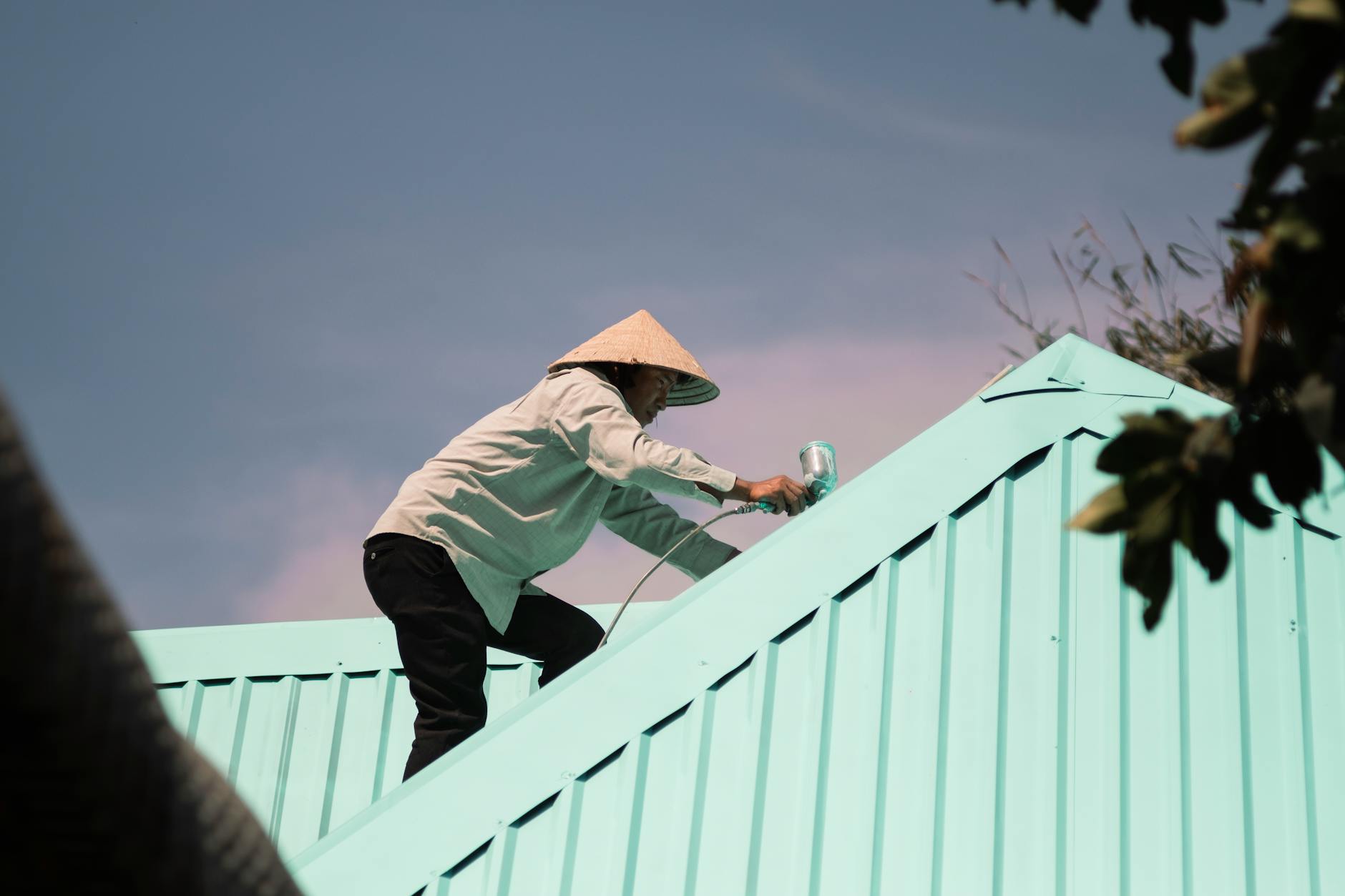
Airless spray equipment delivers the fastest, most uniform finish for large roof areas. Set the pressure between 1,500–2,000 PSI and use a 517 or 519 tip for optimal atomisation with roof coatings. Work in overlapping passes parallel to the ridge, maintaining consistent distance and speed to avoid runs or dry spray.
Roller application takes longer but gives you better control on steep pitches and around penetrations. Use 18-inch rollers with high-density foam or microfibre covers designed for smooth metal surfaces. Back-roll each section to work paint into valleys and eliminate air bubbles.
Regardless of application method, always apply two coats. The first coat seals the surface and highlights any preparation deficiencies; the second coat builds film thickness for long-term protection. Allow minimum four hours between coats in warm, dry conditions—check technical data sheets for specific recoat windows.
Start painting early morning when the roof surface is cool and dew has evaporated. Working on hot metal (above 40°C surface temperature) causes paint to flash-dry before levelling, leaving brush marks and poor adhesion. Stop work by early afternoon in summer to avoid these issues.
Pay special attention to cut-ins around chimneys, vents, and roof-mounted equipment. Use quality angled brushes for detail work and ensure complete coverage on horizontal surfaces where water pools. If you’re looking for more comprehensive guidance on metal roof painting techniques, our painting metal roof guide covers additional surface types and scenarios.
Common mistakes to avoid
Even experienced DIYers make critical errors when painting tin roof surfaces. Avoiding these pitfalls saves money, time, and frustration.
Skipping primer on galvanised roofs. Shiny galvanised iron doesn’t provide enough tooth for paint adhesion without proper etching primer. Paint applied directly to galvanised surfaces often peels within 12–18 months despite looking fine initially.
Inadequate rust treatment. Painting over flaky rust or surface-treating deep corrosion leads to rapid failure. Rust continues spreading beneath the paint film, eventually lifting the coating. Grind rust back to sound metal and use conversion primers on any remaining staining.
Painting in unsuitable weather. High humidity, impending rain, or extreme temperatures compromise curing. Paint applied when rain arrives within 24 hours often washes off or develops permanent water marks. Similarly, painting in temperatures below 10°C prevents proper film formation.
Thinning paint excessively. While some dilution may be necessary for spray equipment, overthinning reduces hiding power and durability. Follow manufacturer guidelines precisely—typically no more than 10% reduction with water for acrylic roof paints.
Neglecting safety equipment. Tin roofs become lethally slippery when wet or painted. Use proper harnesses attached to structural anchor points, wear non-slip footwear, and install roof ladders or scaffolding for steep pitches. Falls from residential roofs cause dozens of fatalities and hundreds of serious injuries annually in Australia.
Ignoring warranty requirements. Most premium roof coatings include 10–15 year warranties that become void if application instructions aren’t followed exactly. Document your preparation work, keep paint batch numbers, and follow recoat timing to preserve warranty protection.
FAQ
How long does painting tin roof last?
Quality acrylic roof paint properly applied lasts 10–15 years in most Australian climates. Coastal environments, extreme UV exposure, and industrial pollution reduce lifespan to 7–10 years. Premium elastomeric and ceramic coatings can extend this to 15–20 years with proper maintenance. Expect to repaint when you notice chalking, fading to 50% of original colour intensity, or visible rust breakthrough.
Can I paint my tin roof myself?
Experienced DIYers with proper safety equipment and reasonable fitness can successfully paint tin roof areas, provided the roof has moderate pitch (less than 25 degrees) and straightforward access. Steep roofs, multi-storey homes, and complex roof lines with multiple valleys and penetrations typically require professional tradespeople with appropriate insurance and scaffolding. The Safe Work Australia guidelines for working at heights should be reviewed before attempting any DIY roof work.
What’s the best time of year to paint a tin roof?
Autumn and spring provide ideal conditions for painting tin roof surfaces across most of Australia. Target mild, dry weather with temperatures between 15–25°C and low humidity. Avoid summer when roof surface temperatures exceed safe working conditions and paint cures too rapidly. Winter painting is possible in northern regions but problematic in southern states where morning dew and low temperatures prevent proper curing.
Do I need council approval to paint my roof?
Most Australian councils don’t require permits for repainting roofs in the same or similar colour. However, heritage-listed properties, homes in heritage overlay zones, and properties subject to design covenants often restrict colour choices. Changing to dramatically different colours (dark to light or vice versa) may require planning approval in some local government areas. Check with your council before purchasing paint if you’re changing colours significantly.
Will painting my tin roof reduce heat inside?
Heat-reflective roof coatings in light colours can reduce ceiling temperatures by 3–7°C and cut air conditioning costs by 15–30% in Australian conditions. The improvement is most dramatic when replacing dark, faded paint with modern solar-reflective formulations. However, adequate roof insulation matters more than paint colour for overall thermal performance—combine both strategies for maximum benefit. For broader home painting insights and cost considerations, see our house painting prices guide.
Painting tin roof surfaces protects your investment, improves comfort, and transforms your home’s appearance for a fraction of replacement cost. Whether you tackle the project yourself or hire professionals, thorough preparation and quality materials deliver results that last through Australia’s demanding climate. Get multiple quotes, check references, and don’t compromise on safety—your roof literally covers your most valuable asset.
Related guides
For more on Australian renovation costs, see: