You’re staring at tired laminate benchtops and chipped cabinet doors, wondering how much a proper kitchen makeover will actually cost in Brisbane. Whether you’re in a post-war weatherboard in Paddington or a modern home in the Redlands, understanding kitchen renovation cost Brisbane pricing in 2026 is essential before you talk to a single tradie or step inside a showroom.
What’s in this guide
- Kitchen renovation cost breakdown for Brisbane
- Brisbane-specific factors that affect pricing
- Renovation scope: budget, mid-range, and premium
- Council approvals and compliance in Brisbane
- Common mistakes to avoid
- FAQ
Kitchen renovation cost breakdown for Brisbane
Kitchen renovation cost Brisbane figures in 2026 typically range from $15,000 to $60,000+ for a standard kitchen (around 10–15 m²), depending on scope and finishes. A basic cosmetic refresh—new doors, benchtop resurface, fresh paint, and updated handles—starts around $15,000–$22,000. Mid-range renovations with new cabinets, stone benchtops, quality appliances, and some plumbing or electrical changes sit between $30,000 and $45,000. High-end projects involving custom joinery, premium European appliances, structural changes, and designer tiles can easily exceed $60,000.
Labour accounts for roughly 30–40% of your total budget. Brisbane tradie rates in 2026 average $70–$95 per hour for carpenters, $80–$110 for licensed electricians, and $85–$115 for plumbers. Expect to pay more for specialists in sought-after suburbs like Ascot, New Farm, or Bulimba where demand is high and parking is tight. Materials—cabinetry, benchtops, splashbacks, flooring—make up the bulk of the remainder, with appliances adding another $3,000–$12,000 depending on brand and features.
A realistic breakdown for a $35,000 mid-range kitchen renovation in Brisbane might look like this:
- Cabinets (flat-pack or semi-custom): $8,000–$12,000
- Benchtops (engineered stone, 10 m²): $3,500–$5,000
- Appliances (mid-tier oven, cooktop, rangehood, dishwasher): $4,000–$6,000
- Splashback (ceramic or porcelain tiles): $1,200–$1,800
- Flooring (hybrid or vinyl, 12 m²): $1,500–$2,500
- Plumbing and electrical: $3,000–$4,500
- Labour (carpentry, installation, project management): $8,000–$12,000
- Miscellaneous (tapware, sinks, waste disposal, lighting): $2,000–$3,000
Prices can climb steeply if you’re tackling a Queenslander with high ceilings, timber floors that need careful protection, or older plumbing that requires re-routing. If you’re comparing kitchen costs across cities, Sydney kitchens and Melbourne kitchens often run 10–15% higher for equivalent scopes due to higher labour and showroom overheads.
Brisbane-specific factors that affect pricing
Brisbane’s subtropical climate, council processes, and housing stock all influence kitchen renovation cost Brisbane figures. Queenslanders and post-war timber homes require extra care: tongue-and-groove timber floors need protection, and high-set homes may need temporary scaffolding or hoists to get cabinets upstairs, adding $800–$1,500 to logistics costs. Older homes in suburbs like Red Hill, Bardon, or Kelvin Grove often have asbestos sheeting in walls or under flooring; professional asbestos removal runs $1,500–$4,000 depending on scope and adds 1–2 weeks to the schedule.
Brisbane City Council handles most inner-city renovations, while outer suburbs fall under Moreton Bay Regional Council, Logan City Council, or Redland City Council. A simple kitchen refresh with no structural changes, plumbing relocation, or increased floor load usually doesn’t need a development approval, but you must ensure any electrical or plumbing work is done by licensed tradies who submit compliance certificates. If you’re knocking down walls (especially if they’re load-bearing), relocating your sink or stove more than a metre, or adding a new window, you’ll likely need building approval. Budget $1,200–$2,500 for private certifier fees and allow 2–4 weeks for the process. The Brisbane City Council building work page outlines when approval is required.
Humidity and ventilation matter more in Brisbane than in cooler cities. A quality rangehood with external ducting (not recirculating) is essential to manage moisture and cooking odours, especially in open-plan layouts common in newer estates around North Lakes, Springfield, or Yarrabilba. Expect to pay $600–$1,200 for a decent rangehood, plus $400–$800 for ducting installation if your existing setup only recirculates. Engineered stone benchtops are popular because they resist moisture better than laminate, and ceramic or porcelain splashbacks are preferable to painted glass in high-humidity zones.
Tradie availability fluctuates with Brisbane’s building cycle. In 2026, demand remains strong in growth corridors (Redlands, Ipswich, northern suburbs), so booking reputable cabinet makers and electricians can require 4–8 weeks’ lead time. Wet-season scheduling (November–March) can add delays if your home has poor site access or if rain disrupts external trades like painters or concreters working on adjacent areas.
Renovation scope: budget, mid-range, and premium
Budget refresh ($15,000–$22,000): This tier suits renters preparing to sell or owner-occupiers wanting a facelift without major structural work. You’ll keep the existing cabinet boxes and layout, reface or repaint doors, install a laminate benchtop or resurface the current stone, update handles and tapware, and give walls a fresh coat of paint. Appliances stay unless they’re broken. Flooring might get a vinyl overlay if the substrate is sound. Labour is minimal—mostly a handyman, painter, and maybe a plumber to swap the tap. Total project time: 1–2 weeks. This approach works well for older units in West End, Woolloongabba, or Stones Corner where full-scale renos don’t make financial sense.
Mid-range renovation ($30,000–$45,000): The sweet spot for most Brisbane homeowners. You’ll replace all cabinets (flat-pack or semi-custom), install engineered stone benchtops, add a tile or stone splashback, upgrade to mid-tier appliances (brands like Bosch, Westinghouse, or Fisher & Paykel), and possibly relocate the sink or add a breakfast bar. Flooring gets replaced with hybrid planks or quality vinyl. Electricians add LED downlights and maybe an extra powerpoint or two; plumbers may relocate the dishwasher or add a pot-filler tap. Project time: 4–6 weeks. This tier delivers a genuine transformation and suits family homes in suburbs like Carindale, The Gap, Mitchelton, or Wynnum where property values justify the investment.
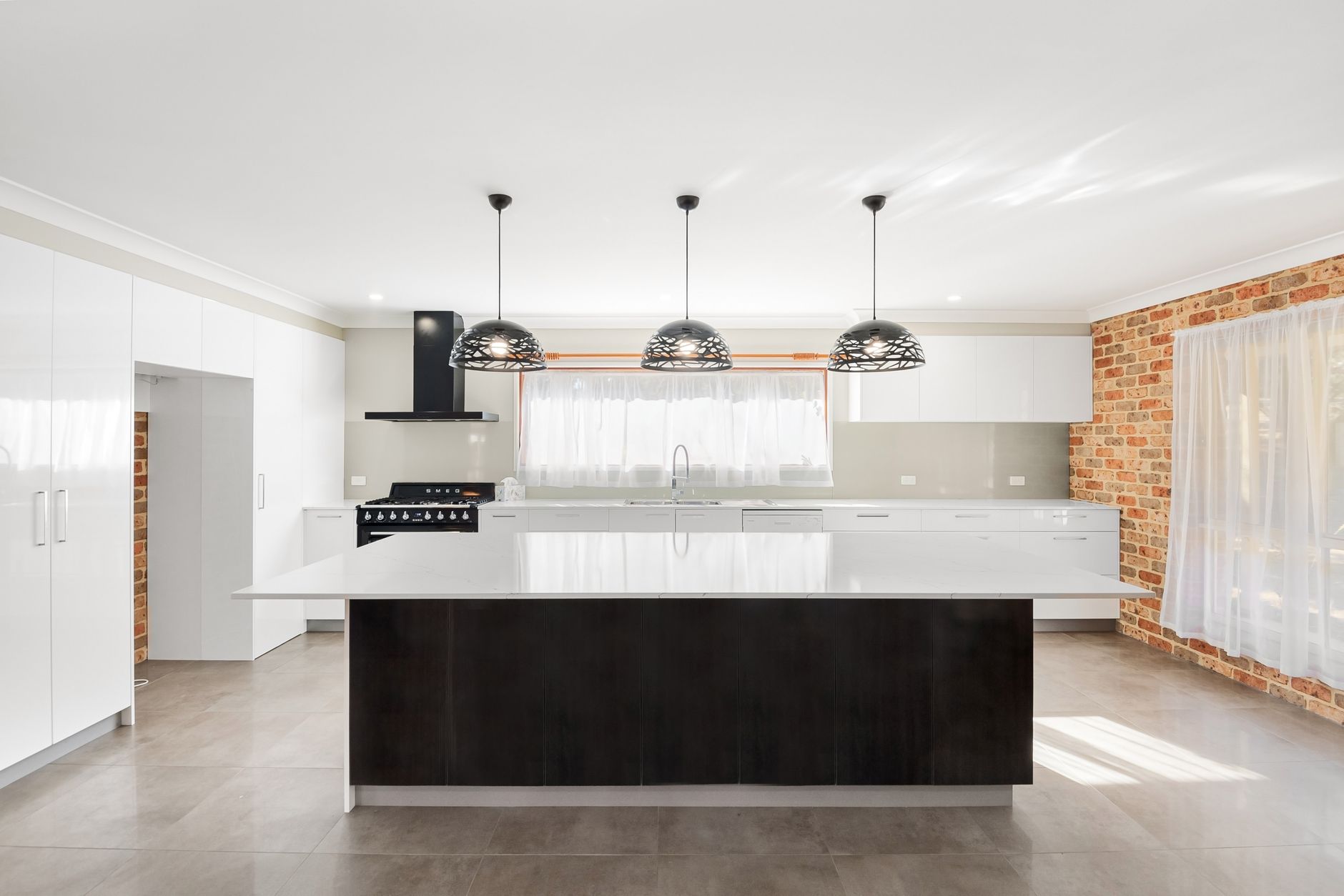
Premium transformation ($50,000–$80,000+): Custom or semi-custom cabinetry (polyurethane, timber veneer, or two-pack), premium stone benchtops (marble, granite, or ultra-compact surfaces like Dekton), high-end European appliances (Miele, Smeg, Gaggenau), designer tapware, statement pendant lighting, and possibly structural changes—removing a wall, raising the ceiling, or adding bi-fold servery windows. You might include a butler’s pantry, wine fridge, or integrated coffee machine. Flooring could be engineered timber or large-format porcelain. Project time: 8–12 weeks. This tier is common in prestige suburbs like Ascot, Hamilton, Hawthorne, or Fig Tree Pocket where homes exceed $1.5 million and buyers expect showpiece kitchens.
Council approvals and compliance in Brisbane
Most cosmetic kitchen renovations in Brisbane—new cabinets, benchtops, appliances, tiling, painting—are classified as building work that doesn’t require development approval, provided you don’t alter the building’s structure or significantly change plumbing or electrical layouts. However, any work must still comply with the National Construction Code (NCC), and trades must be licensed.
You do need council or private certifier approval if you:
- Remove or alter a load-bearing wall (common when creating open-plan living)
- Relocate major plumbing fixtures more than one metre from the existing position
- Add or enlarge windows or doors in external walls
- Increase the floor load (rare in kitchens unless installing very heavy stone or commercial-grade equipment)
- Work on a pre-1946 home listed on Brisbane’s heritage register
Private certifiers can fast-track approvals and often charge similar fees to council ($1,200–$2,000 for straightforward jobs). If asbestos is present—common in homes built before 1990—you must engage a licensed asbestos removalist and notify Workplace Health and Safety Queensland at least five days before removal begins. Budget $1,500–$4,000 for professional asbestos removal depending on the area affected.
Electrical and plumbing work must be completed by licensed tradies who issue compliance certificates. Keep these certificates; they’re required when you sell and can protect you from liability. If you’re doing any DIY demolition (removing old cabinets, tiles, or benchtops), you can save $1,000–$2,000 in labour, but leave all structural, electrical, and plumbing work to the pros.
Common mistakes to avoid
Underestimating the real kitchen renovation cost Brisbane pricing: Many homeowners budget for materials and cabinets but forget to account for demolition, waste removal, and the inevitable “while we’re at it” upgrades—new powerpoints, replastering, repainting adjacent rooms. Always add a 15–20% contingency to your initial quote.
Choosing cabinets based on price alone: Flat-pack cabinets from big-box stores can look sharp in photos, but quality varies wildly. Check carcass thickness (16–18 mm is standard; anything thinner sags), hinge quality (soft-close Blum or Hettich is the benchmark), and drawer systems (metal runners beat plastic). Poor-quality cabinets start sagging or peeling within two years in Brisbane’s humidity.
Ignoring ventilation: Recirculating rangehoods are cheaper upfront but do little to manage moisture and odours. In Brisbane’s climate, external ducting is worth the extra $600–$1,000 to prevent mould and keep your home comfortable, especially in open-plan layouts where cooking smells drift into living areas.
Skipping the pre-reno asbestos check: If your home was built before 1990, assume asbestos is present until proven otherwise. Disturbing asbestos sheeting or tiles during demo without proper protection is illegal and dangerous. A pre-reno asbestos inspection costs $300–$600 and can save you from a $10,000+ cleanup or health scare.
Not locking in fixed-price quotes: Material costs fluctuate. A vague “around $35,000” estimate can balloon to $42,000 when stone prices jump or the tradie discovers dodgy plumbing. Insist on itemised, fixed-price quotes that specify brands, models, and inclusions, and get everything in writing before work begins.
Forgetting about lighting: Overhead downlights alone create harsh shadows on benchtops. Budget $800–$1,500 for under-cabinet LED strip lighting or puck lights—they make prep work easier and add a premium feel. Dimmers and smart switches cost an extra $200–$400 but let you adjust ambience for entertaining.
FAQ
What is the average kitchen renovation cost in Brisbane in 2026?
The average kitchen renovation cost Brisbane homeowners pay in 2026 ranges from $30,000 to $45,000 for a mid-range project covering new cabinets, engineered stone benchtops, quality appliances, tiling, and updated plumbing and electrical. Budget refreshes start around $15,000, while premium custom kitchens easily exceed $60,000.
Do I need council approval for a kitchen renovation in Brisbane?
Most kitchen renovations that involve only cosmetic changes—new cabinets, benchtops, appliances, splashbacks—don’t require development approval from Brisbane City Council. However, you must get approval if you remove load-bearing walls, relocate plumbing more than a metre, add new windows, or work on a heritage-listed property. All electrical and plumbing work must be done by licensed tradies who issue compliance certificates.
How long does a typical kitchen renovation take in Brisbane?
A budget cosmetic refresh takes 1–2 weeks. A mid-range renovation with new cabinets, benchtops, and appliances typically requires 4–6 weeks from demolition to final clean. Premium custom kitchens involving structural changes, butler’s pantries, or intricate joinery can take 8–12 weeks. Wet-season delays and tradie availability can add extra time, so book early and build buffer into your schedule.
Are Brisbane kitchen renovation costs higher than other capitals?
Brisbane kitchen renovation cost pricing in 2026 sits roughly 5–10% below Sydney and Melbourne for equivalent scopes. Tradie rates are slightly lower, and showroom overheads are less, but material costs (stone, appliances, tiles) are comparable Australia-wide. However, Brisbane-specific factors—Queenslander logistics, asbestos removal, humidity-driven ventilation upgrades—can narrow the gap for older homes.
What’s the best way to save money on a Brisbane kitchen renovation?
Keep the existing layout to avoid costly plumbing and electrical relocation. Do your own demolition and painting if you’re handy, saving $1,500–$3,000 in labour. Choose semi-custom or quality flat-pack cabinets over full custom. Shop around for stone remnants (offcuts) for smaller benchtops or islands—you can save 30–40%. Time your renovation for quieter periods (late autumn or winter) when tradies offer better rates and availability is higher.
Planning a kitchen renovation in Brisbane takes careful budgeting, realistic timelines, and an understanding of local council rules and climate considerations. Whether you’re sprucing up a Queenslander in Paddington or creating a showpiece kitchen in Hamilton, knowing the true kitchen renovation cost Brisbane pricing helps you make informed decisions, avoid costly surprises, and get a result that adds genuine value to your home for years to come.